A plunger you are not embarrassed to leave out
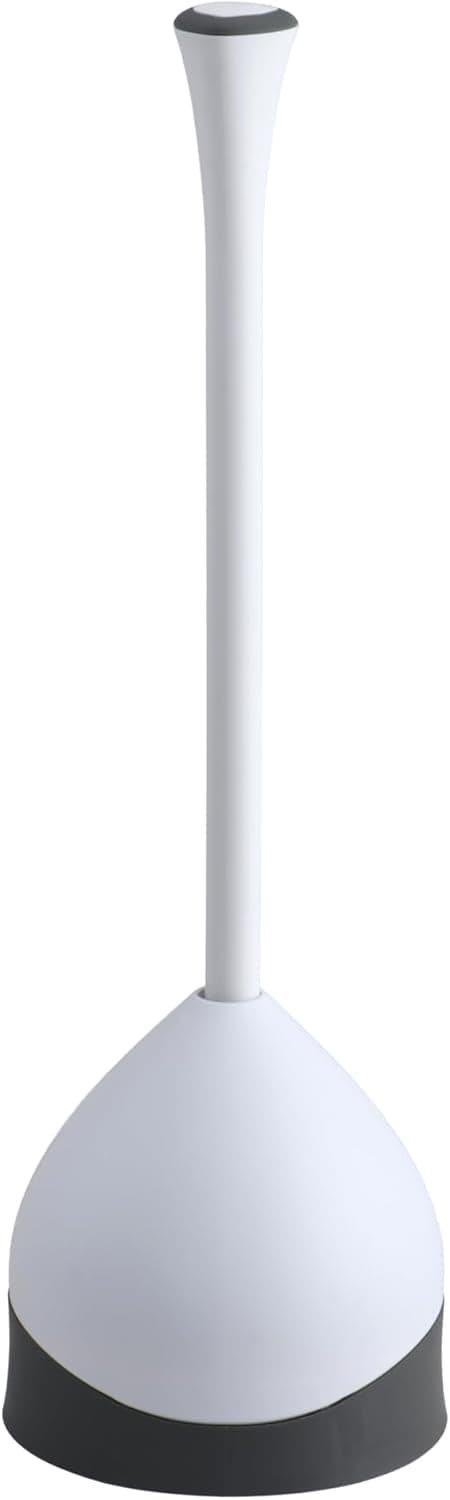
Every bathroom needs a plunger that works, yet many households hide a cheap red cup on the floor behind the door because the tool looks utilitarian. The Clorox toilet plunger with hideaway holder caddy solves that tension: performance-first rubber paired with a discrete station that reads as intentional rather than accidental. When guests need help at midnight, the plunger should be findable in seconds, not buried in a hall closet.
BaathMD recommends treating clog tools like smoke detectors—present, maintained, and tested before an emergency. This set is designed for residential toilets, where a proper seal and strong plunge action clear most soft blockages without calling a plumber. The hideaway format is especially valuable in half-baths visible from living areas, where aesthetics matter as much as function.
Hideaway caddy: how concealment actually works
The caddy is a ventilated shell that fully encloses the plunger cup when stored. A door or flap, depending on the unit, closes over the rubber head so drips stay inside the base instead of on tile. The exterior is smooth plastic meant to wipe clean, which matters because plunge water can splash microscopic bacteria onto any surface nearby.
Interior dimensions are sized for the included plunger handle length, so the tool stands vertically without leaning. That vertical storage helps the rubber cup regain its shape between uses. If you have ever stored a plunger horizontally in a cabinet, you know the cup can crease; vertical hideaway storage reduces that problem.
Heavy-duty rubber and effective plunging technique
The business end is a heavy-duty rubber flange designed to fold inward and seal around toilet drain openings. A good seal is what creates pressure waves that dislodge clogs; a stiff, cracked cup cannot flex to match bowl contours. Clorox specifies heavy-duty rubber here to imply thicker walls that resist splitting after repeated compression.
Technique still matters: add enough water to cover the cup, seat the flange over the drain opening, and plunge with controlled pushes rather than wild splashing. Break the seal slightly on the upstroke to draw water back, then compress again. Several cycles often clear paper jams; if water level rises dangerously, stop and assess before continuing.
Compact footprint for modern bath layouts
Product dimensions in the listing—roughly six and a half by nineteen and a half inches for the assembled station—target bathrooms where every inch counts. The caddy sits beside the toilet or between the toilet and vanity without blocking the door. Compared with a traditional wooden-handle plunger in an open bucket, the hideaway unit presents a single vertical silhouette.
Non-skid base features, where included, keep the caddy from sliding on wet tile during retrieval. That stability is a small detail until you are plunging one-handed at an awkward angle. For renters, the freestanding design avoids drilling or adhesive mounts that might violate lease terms.
When to plunge, when to stop, and when to call a pro
Plunge when water drains slowly or rises after a flush but the bowl is not overflowing. If multiple fixtures in the home back up simultaneously, the blockage may be in the main line—plunging one toilet will not fix that, and continuing can push waste into other drains. Foreign objects, toys, and hygiene products that do not dissolve require mechanical retrieval or professional snaking, not repeated plunging.
After a successful plunge, flush once with the lid down to control spray, then disinfect the handle and exterior of the caddy with a bathroom wipe. Replace the plunger inside the hideaway and leave the door closed. If clogs recur weekly, inspect whether someone is flushing wipes labeled non-flushable; fixing habits is cheaper than repeated emergencies.
Care, odor control, and who should choose this model
Empty drip liquid from the caddy base during regular bathroom cleaning. A capful of disinfectant in the bottom of the caddy, rinsed after ten minutes, controls odor if the cup was stored wet. Replace the rubber cup if it hardens, cracks, or no longer holds a seal—usually years out, but sun exposure in a windowed bath can accelerate aging.
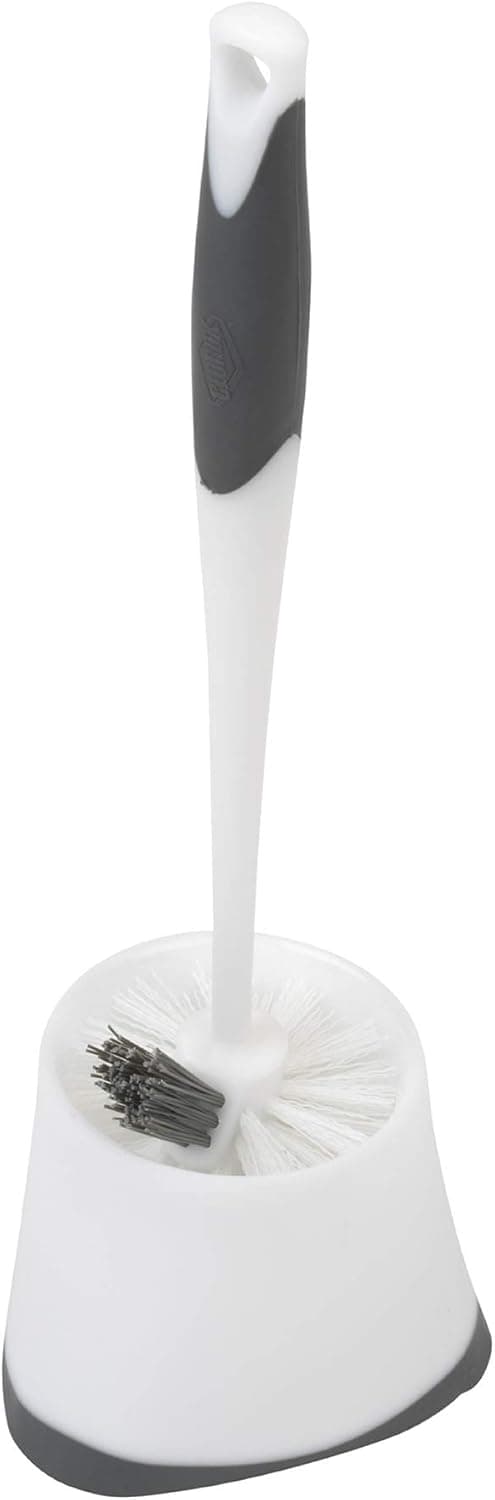
This Clorox hideaway plunger is the right pick for anyone upgrading from a bare plunger on the floor, especially in guest baths and primary suites where the tool must work well and look contained. Pair it with a quality bowl brush for a complete toilet station; BaathMD considers this plunger the baseline emergency tool every edited bathroom should include.