Why under-rim cleaning changes the whole toilet routine
Most toilet brushes clean what you can see along the bowl wall, yet mineral rings and bacteria often cling beneath the rim where water jets enter. That hidden band is where odor starts and where stains become permanent if you only swish the visible waterline. A brush engineered for under-rim contact reaches the ledge where grime collects without forcing your hand awkwardly into the bowl.
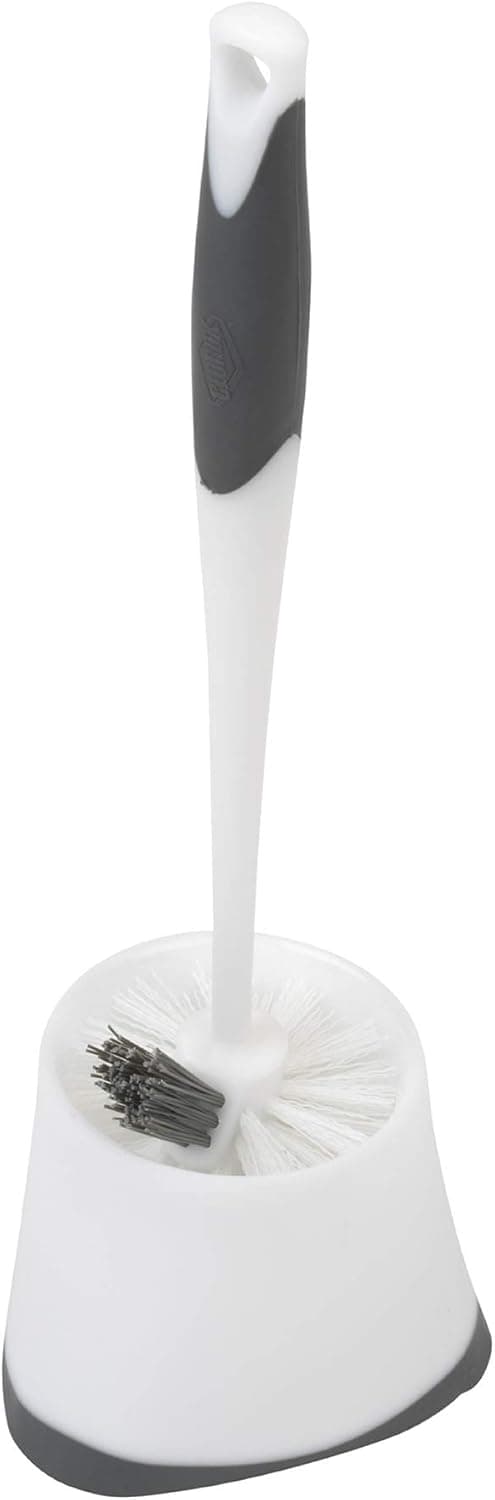
Clorox built its reputation on disinfection, and this bowl brush applies that mindset to hardware: bristles shaped to scrub where standard domed brushes miss, paired with storage that keeps the tool off the floor. For BaathMD readers editing a bathroom for both appearance and hygiene, under-rim capability is the difference between a toilet that looks clean and one that actually is.
Corner caddy design for tight floor plans
The included corner storage caddy is the defining feature of this set. Toilets often sit against a wall with only a few inches of clearance on one side; a round bucket consumes floor space and collects drips on the baseboard. A triangular caddy tucks into the ninety-degree angle between the tank and the wall, using dead space that most floor plans already have.
The caddy holds the brush upright so bristles air-dry instead of stewing in trapped water. Ventilation slots or open sides, depending on production batch, allow airflow that reduces mildew on bristles over time. Because the footprint is compact, the set works in powder rooms, apartment baths, and guest toilets where a full-size cleaning station would feel crowded.
Bristle shape and scrubbing mechanics
Under-rim brushes use an angled head or extended bristle pattern so you can guide the tip along the inner circumference of the bowl while the handle stays mostly outside. That geometry matters when you apply toilet bowl cleaner: gel clings better when you spread it on the surface you intend to scrub, and under-rim bristles help work cleaner into the jet holes area without splashing.
Stiffness is balanced: firm enough to remove buildup, flexible enough to conform slightly to porcelain curves. Porcelain is hard but can scratch if you use metal tools; plastic bristles with a structured head are the appropriate interface. Replace the brush when bristles splay or discolor permanently; that is usually a sign they have absorbed residue that no longer rinses clean.
Placement, drips, and daily bathroom flow
Install the caddy on the side where you have the most clearance—typically opposite the toilet paper holder or away from the door swing. After scrubbing, tap the brush lightly inside the bowl to shed excess water before returning it to the caddy. That habit keeps puddles from forming in the base and prevents streaks on tile.
If the bathroom floor is textured tile, verify the caddy sits flat; corner units are stable on most surfaces but can rock slightly on uneven grout lines. A thin silicone mat under the caddy is optional insurance in rentals where you want to avoid ring marks. Keep cleaner bottles separate; storing acid-based bowl cleaner inside the same caddy as the brush can corrode plastic over years of use.
Maintenance rhythm that protects the brush
Rinse the brush in clean flush water after each use, then let it dry in the caddy. Once a week, fill the caddy with hot water and a splash of mild dish soap, swish the brush, empty, and rinse. Monthly, disinfect the caddy interior with a diluted bleach solution compatible with your flooring, rinse thoroughly, and dry before returning the brush.
Never store the brush inside a sealed bag; trapped moisture is what ruins bristles fastest. If someone in the household is ill, consider dedicating this brush to that bathroom only until symptoms pass, and disinfect the handle with a wipe. Handles with a textured grip are easier to hold with gloves during deep cleans.
Pairing with cleaners and when this set is the right pick
Clorox bowl cleaners are the obvious companion, but any gel or thick liquid cleaner works if you apply it under the rim and let it dwell per label directions before scrubbing. Avoid mixing bleach products with ammonia-based cleaners in the same session; ventilation and single-product routines are safer.
Choose this Clorox under-rim brush with corner caddy when you want a brand-name tool that prioritizes rim contact and space efficiency. Skip it only if you already own a wall-mounted brush system you love; otherwise, for standard floor-mounted toilets in small to medium baths, this is a straightforward upgrade from a flat puck brush sitting open on the tile.